
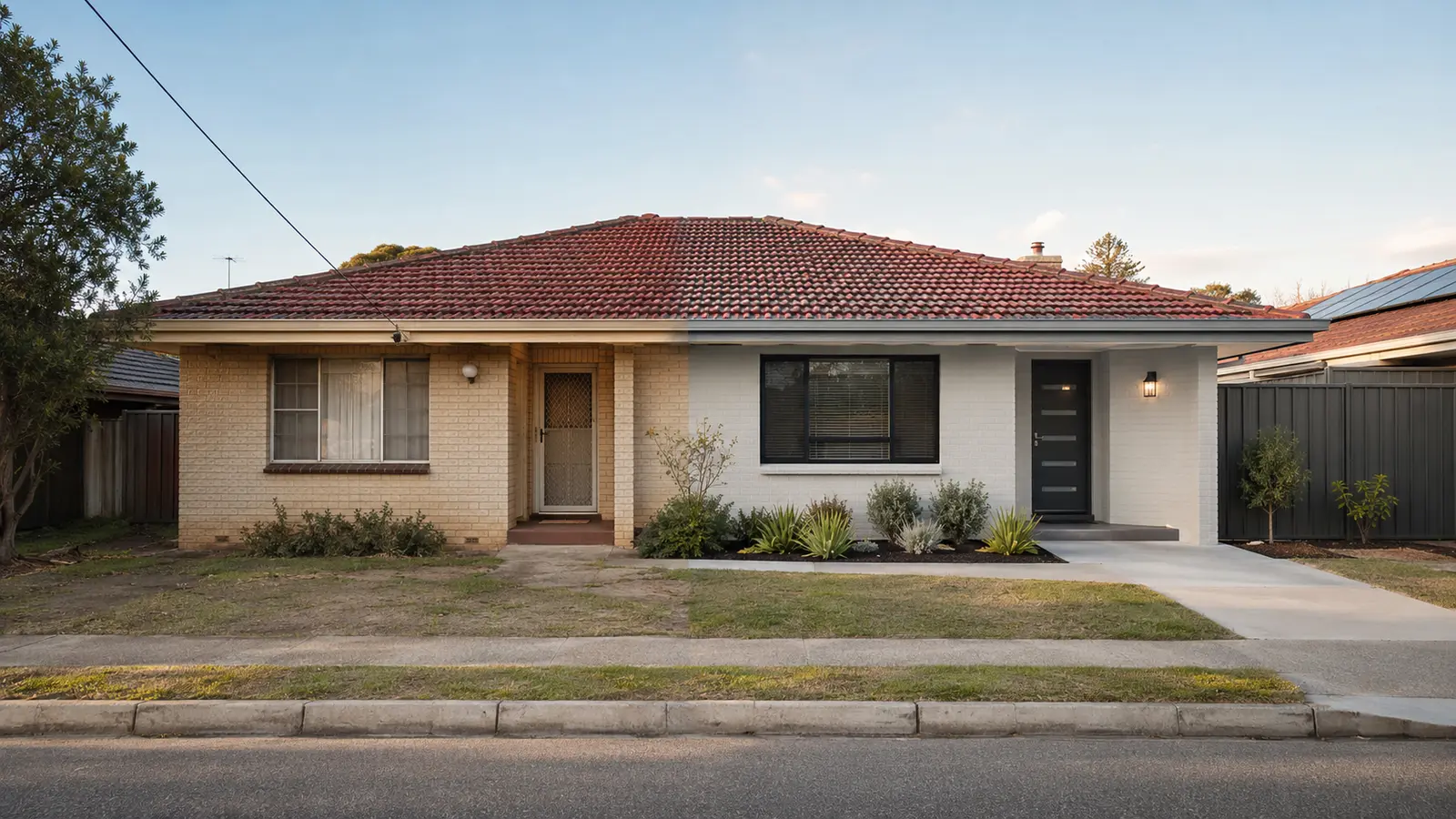
Kixstart Property Brief | Selling & Renovation
Perth remains a strong property market, but rising listings are giving buyers more choice. For owners of older homes, the question is becoming more important: should you renovate before selling, or let the next owner see the opportunity?
For much of the recent Perth property boom, sellers could bring an ordinary home to market and still attract urgent competition.
That advantage is beginning to ease.
REIWA recorded 6,777 properties for sale in Perth at the end of the week ending 26 July 2026. That was 10.8 per cent higher than four weeks earlier and 100.9 per cent higher than a year earlier. Sales remained active, but buyers had substantially more property to compare. See REIWA’s latest weekly market snapshot.
This is not evidence of a market collapse. Perth’s median house price rose to $930,000 in June, 16.3 per cent higher than a year earlier. It does mean that owners can no longer assume every property will sell quickly or well regardless of condition, presentation and price.
What has changed?
More homes are being listed and buyers have become more cautious.
REIWA reported that houses sold in a median of 14 days in May, compared with nine days in February. Units moved from eight days to 13. Those timeframes remain fast by historical standards, but the direction is clear: buyers have more time to inspect, compare and reject properties that do not represent value. Read REIWA’s analysis of selling times.
Pricing pressure has also become more visible. Three in ten Perth houses sold below their listing price in June. Among sellers who discounted, the average reduction was 7.5 per cent. However, 70 per cent still sold at or above the listed price.
The fair reading is that Perth is stabilising from unusually intense conditions. It is not that prices are broadly falling. Conditions also vary considerably between suburbs and property types. Review REIWA’s discounting data.
For a broader buyer-side view of that shift, see our brief on what Perth’s more balanced conditions mean before making an offer. Owners with development or vacant-land exposure may also find our 12-month Perth land-sales analysis useful when testing future demand.
Does that mean you should renovate?
Sometimes. But renovating before sale is not automatically the smart decision.
The commercial test is simple:
Will the likely increase in sale price exceed the renovation cost, holding cost, risk and value of your time?
A renovation that costs $80,000 and adds $90,000 to the sale price has not necessarily produced a $10,000 gain. Finance, rates, insurance, utilities, approvals, selling costs, delays and unexpected work can consume that margin quickly.
The relevant comparison is not the renovated sale price against the renovation invoice. It is the owner’s likely net position under each available pathway.
Three pathways for an older Perth property
1. Sell the property as it stands
Selling as-is can make sense when the property needs extensive work, the owner values speed and certainty, or the likely buyer is planning a major renovation or redevelopment.
This pathway avoids construction risk and additional holding costs. The trade-off is that buyers may price in the work conservatively, particularly when defects are unclear.
2. Complete targeted pre-sale improvements
This is often the most defensible option when modest work can remove obvious buyer objections.
- Repair visible damage and incomplete maintenance
- Clean, declutter and improve natural light
- Refresh tired paint in neutral colours
- Replace damaged flooring or outdated light fittings where justified
- Improve gardens, entry presentation and street appeal
- Address small faults that make the property appear neglected
These works do not transform the property. They help buyers see it clearly and reduce the number of reasons to negotiate the price down.
3. Undertake a substantial renovation or repositioning
A larger renovation may work when comparable sales show a clear and repeatable premium for the finished product, the scope is well understood and the project can be delivered efficiently.
It carries more risk. Kitchens and bathrooms can uncover plumbing, waterproofing, electrical and structural problems. Design choices can become too personal. Delays can push the sale into different market conditions.
For some larger or unusually positioned blocks, the property may also have value beyond its existing home. Our earlier brief explains why proposed WA planning reforms could change the development potential of some Perth properties. That potential should be investigated before an owner spends heavily on improvements that a future buyer may remove.
Where renovation is most likely to pay
Pre-sale work is more likely to improve the result when:
- There is a clear gap between the property’s current presentation and nearby competing homes
- The work addresses a known buyer objection
- Reliable quotes and a defined scope are available
- The work can be completed quickly
- Recent comparable sales support the expected premium
- The design suits the likely local buyer
- A sensible contingency remains after all costs are included
The local evidence matters more than a general rule. A renovation that works in one suburb, price range or buyer market may fail in another.
Where owners get caught
The biggest mistake is starting with the renovation and testing the numbers afterwards.
- Overcapitalisation: spending beyond what local buyers will repay
- Scope growth: a cosmetic update becoming a larger building project
- Hidden defects: asbestos, roofing, drainage, wiring, plumbing or waterproofing issues
- Holding costs: interest and ownership costs continuing while work runs late
- Wrong product: creating a finish or layout the target buyer does not value
- Lost development value: improving a home without first testing the land and planning options
A higher sale price can still produce a worse financial result.
What should an owner do next?
Before committing to major work, compare at least three scenarios:
- Likely sale outcome in the property’s current condition
- Likely outcome after targeted presentation and repair work
- Likely outcome after a larger renovation or value-add project
Each scenario should include realistic sale evidence, renovation costs, a contingency, holding costs, selling costs, timing and risk.
Owners should also speak with an experienced local selling agent about current buyer behaviour and obtain appropriate building, planning and financial advice before making a substantial commitment.
Unsure which pathway fits your property?
If you own an older Perth property and are considering selling, renovating or exploring its value-add potential, send Kixstart Property the address and several photographs.
We can provide an initial view of the available pathways and identify which questions should be answered before you commit to expensive work.
Principal sources
- REIWA: Perth weekly market snapshot, week ending 26 July 2026
- REIWA: The number of properties for sale in Perth exceeds 6,000
- REIWA: Homes taking nearly twice as long to sell
- REIWA: Three in 10 Perth houses selling below listing price
This article provides general information only. It is not real estate, valuation, building, planning, legal, taxation, financial or investment advice. Market conditions and property outcomes vary. Obtain advice appropriate to your property and circumstances before acting.
Pingback: Fewer Buyers, More Listings: What Perth’s Market Shift Means Before You Make an Offer - Kixstart Property
Pingback: Could WA’s Planning Reforms Unlock Your Perth Property? - Kixstart Property