
Kixstart Property Brief | Planning & Development
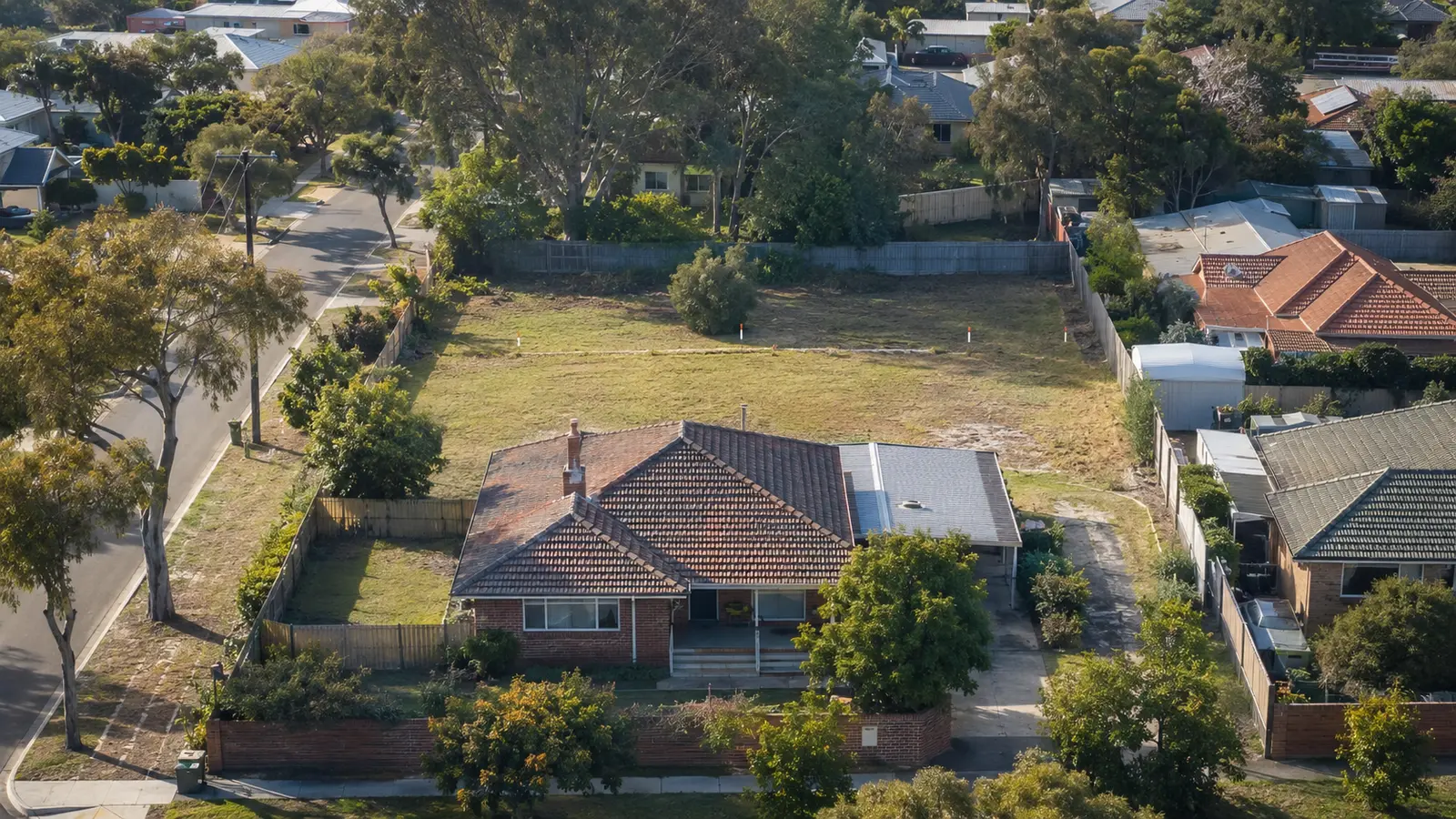
Proposed changes could allow more than 50,000 existing Perth properties to be subdivided. But owning a 700-square-metre block will not automatically make subdivision possible or profitable.
A suburban Perth property that cannot be subdivided today may have development potential from mid-2027.
The Western Australian Government has announced proposed changes to the Residential Design Codes, commonly called the R-Codes. The most significant proposal would remove the average lot-size requirement for land coded R20 and below.
Under the current rules, an R20 property generally requires an average of 450 square metres per lot. This usually means approximately 900 square metres is needed to create two conventional lots.
The proposed reform could allow some owners with blocks of approximately 700 square metres to subdivide. The Government estimates that more than 50,000 existing metropolitan properties could potentially benefit.
That headline deserves attention. It also needs a reality check.
What has actually changed?
Nothing has changed yet.
The reforms remain proposals. Draft changes are expected to be released for public consultation later in 2026, with implementation anticipated from mid-2027.
The package also considers:
- Faster approvals for compliant single homes
- Fewer planning approvals for straightforward renovations, patios and carports
- Three-storey development in some R40 areas
- Revised parking requirements for apartments and ancillary dwellings
- Changes to building heights in medium and higher-density areas
The stated objective is to increase housing supply within established suburbs and reduce unnecessary delays in the planning system. Read the WA Government announcement.
Why this matters to property owners
Subdivision potential can materially change how a property should be assessed.
An owner may eventually have several options:
- Retain the existing home and create a rear lot
- Demolish and create two new homes
- Sell the property with identified development potential
- Develop one dwelling and sell the other lot
- Retain both properties as long-term investments
However, additional development potential does not automatically translate into additional profit.
A property can satisfy the minimum land-area requirement and still be unsuitable because of:
- Insufficient frontage
- An awkward block shape
- The position of the existing house
- Sewer, drainage or servicing limitations
- Easements or restrictive covenants
- Significant trees or environmental constraints
- Bushfire requirements
- Local planning provisions
- Demolition, construction and finance costs
- Weak demand for the finished product
The important figure is not the number of lots that might be created. It is the value remaining after every development cost, delay and risk has been accounted for.
Where is the opportunity?
The strongest opportunities may be older homes on larger, reasonably level blocks in established suburbs with good transport, schools and local services.
Properties with side access, corner frontage or an existing home positioned toward the front of the block may deserve particular attention. These features can sometimes make it easier to retain the original home while creating another lot.
Demand will also matter. A technically possible subdivision can still be a poor decision if the completed homes or lots do not match what local buyers are willing to purchase. Our 12-month analysis of Perth land-sales activity explains why current transaction trends should be tested before assuming future lots will sell quickly.
REIWA has supported the proposed reforms as a way to increase infill housing, while warning that traffic, parking, privacy and design impacts still need to be addressed. It also cautions that the reforms will take time to implement and that owners will not all act immediately. Read REIWA’s response.
What should owners do now?
Do not begin spending heavily based on the announcement alone.
If the existing home is part of the decision, also compare the subdivision pathway with selling as-is or improving the dwelling first. Our brief on whether to renovate before selling in the current Perth market sets out that comparison.
The sensible first step is a preliminary property review covering:
- Current zoning and density coding
- Approximate land area, frontage and dimensions
- Existing house position
- Sewer, easement and access constraints
- Local planning requirements
- Likely development options
- Preliminary costs and potential end values
- Whether waiting for the proposed reforms may improve the options
The proposal creates a reason to reassess some properties. It does not create a reason to rush.
Could your property be affected?
If you own a larger property in Perth and want to understand whether the proposed reforms could change its development potential, send Kixstart Property the address.
We can complete an initial review and explain which options may deserve further investigation. Any development decision would remain subject to the final reforms, local planning requirements and advice from appropriately qualified planning, surveying and development professionals.
This article provides general information only. It is not planning, legal, financial, taxation, building or investment advice. Proposed reforms may change before implementation. Every property remains subject to detailed investigation, professional advice and approvals.
Pingback: Fewer Buyers, More Listings: What Perth’s Market Shift Means Before You Make an Offer - Kixstart Property
Pingback: Perth Land Sales Are Slowing. The 12-Month Trend Matters More Than One Bad Week - Kixstart Property